Pro Tips for Success
Proper Yeast Activation
To ensure your yeast is effective, make sure your warm water is around 110°F (43°C). Too hot can kill the yeast, while too cold may not activate it properly. Always test the temperature with your finger; it should feel warm like bathwater.
Kneading Technique
Knead your dough enough to create a smooth, elastic texture. This helps in gluten development. If it feels too sticky, dust with just a little extra flour. Too much can make the bread dense.
Baking to Perfection
Every oven is different, so keep an eye on your bread as it bakes. If your loaf browns too quickly, lightly cover it with aluminum foil for the remainder of the baking time to prevent burning.
Storage and Freshness
Room Temperature
Once completely cooled, store the bread in a paper bag or wrapped in plastic to maintain freshness. Enjoy it within 2-3 days for the best quality.
Freezing for Later
If you want to keep your Parmesan Bread for a longer time, slice it and store in an airtight container or freezer bag. It can last up to 3 months in the freezer. Thaw at room temperature and reheat in the oven for the best taste.
Reviving Stale Bread
If your bread becomes stale, a simple way to revive it is to wrap it in damp paper towels and microwave for about 10-15 seconds. This can help bring back some of its soft texture.
Final Thoughts
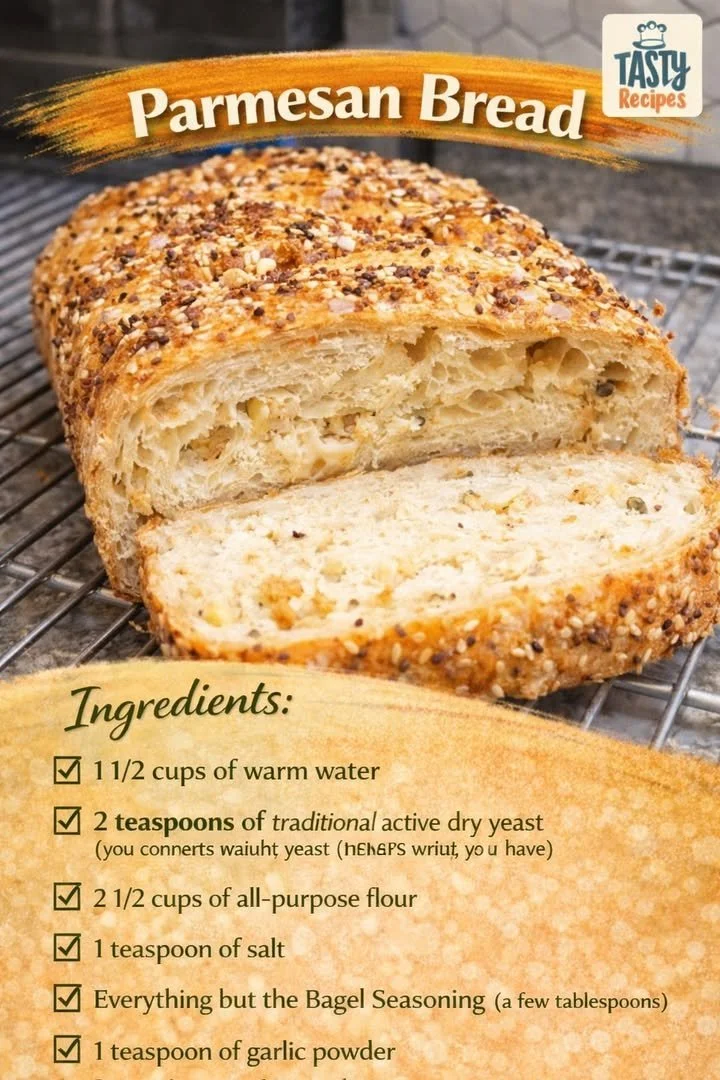
This Parmesan Bread recipe is a celebration of simple ingredients coming together to create something truly exceptional. The flavors resonate with warmth and nostalgia, making it the perfect addition to any meal. With its tremendous taste and texture, this bread is sure to impress friends and family alike.
Have you ever tried baking your own bread? What flavors would you like to experiment with next?