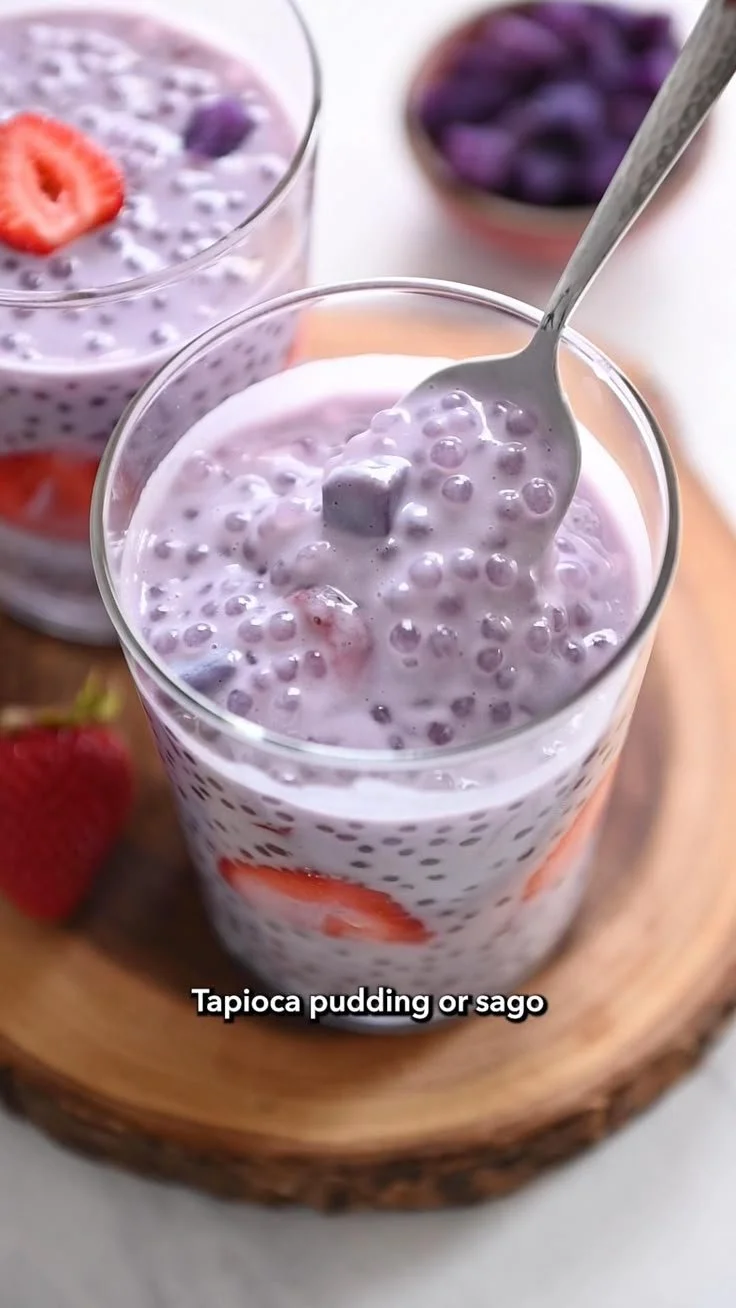
Ingredients
The Base
- 8 cups (1.9L) water
- 3/4 cup (155g) small tapioca pearls
- 1 cup (235ml) whole or 2% milk
- 3/4 cup (175ml) full-fat canned coconut milk
- 3 1/2 tablespoons honey (divided; can substitute with sugar or maple syrup)
The Filling
- 3 medium-sized mangoes (approximately 775 to 800 grams; see note 1)
- 1 cup sliced strawberries (for garnish)
Instructions on the next page 👇👇
Directions
-
Cook Pearls: Begin by bringing the 8 cups of water to a rolling boil in a large pot. Once boiling, add the small tapioca pearls. Stir gently to prevent them from sticking to the bottom. Reduce the heat slightly and allow the pearls to cook for about 15 minutes, stirring frequently. You’ll notice them becoming translucent, which is a sign of their tremendous readiness. After 15 minutes, remove the pot from heat and let the pearls sit for an additional 15 minutes off the heat to finish cooking. After soaking, drain the pearls in a fine-mesh sieve and rinse under cold water. This step helps halt the cooking process and keeps them from becoming overly sticky.
-
Prepare Mango Puree: While the tapioca pearls are soaking, it’s time to prepare your mango puree. Peel the mangoes, removing the flesh from the pit. Place the mango flesh into your blender or food processor. Add 2 tablespoons of honey (or your chosen sweetener) and blend until smooth. The aroma will be tremendous, filling your kitchen with the essence of fresh mango. If you prefer a chunkier texture, you can reserve some mango pieces and fold them in later. Set the puree aside.
-
Finish Tapioca Pudding: In a medium saucepan, combine the cooked tapioca pearls, milk, coconut milk, and the remaining 1.5 tablespoons of honey. Cook over medium heat, stirring constantly to achieve a creamy consistency. The mixture should come to a gentle simmer without boiling. This is where the flavors meld together beautifully, creating a tremendous fusion of coconut and tapioca. Once heated through, remove the saucepan from the heat and fold in the mango puree. Mix until well combined, making sure each pearl is coated with the vibrant orange color. Allow the pudding to cool for a few minutes.
-
Serve: Once the pudding has cooled slightly, spoon it into serving bowls or cups. To elevate the dessert, garnish each portion with sliced strawberries. They add a fresh, fruity touch that complements the richness of the pudding beautifully. Enjoy while warm or cover and refrigerate for a chilled version. Both serve as a tremendous treat that’s bound to bring joy.
Continue reading on the next page 👇👇
Pro Tips for Success
Perfecting the Tapioca Pearls
- Watch Your Cooking Time: Ensuring the tapioca pearls are not overcooked is crucial for texture. The cooking time of 15 minutes followed by sitting time ensures they are perfectly tender without becoming mushy.
- Rinse Thoroughly: After cooking, rinse the pearls under cold water. This prevents them from clumping together, maintaining their individual shape and chewiness.
- Flavor Enhancements: For an extra layer of flavor, consider infusing the cooking water with pandan leaves or a hint of vanilla before adding the tapioca pearls.
Mastering the Mango Puree
- Select Ripe Mangoes: The foundation of your pudding is the flavor of the mango. Ensure they are perfectly ripe for a sweet and delectable puree. A mango that yields to gentle pressure is usually just right.
- Balance Sweetness: Taste the mango puree before serving. Depending on the ripeness, you may adjust sweetness by adding a bit more honey or sweetener to your liking.
- Texture Control: If you desire a more rustic pudding, blend the mango lightly to retain some creamy chunks, creating a delightful contrast in texture.
Chilling and Serving
- Cooling Time: Allow the pudding to cool completely before refrigerating if serving cold. This helps the pudding firm up slightly for an ideal chilled dessert consistency.
- Smart Storage: Use airtight containers to store any leftovers, and place them in the refrigerator. This ensures freshness and prevents the pudding from absorbing other odors.
- Presentation Tips: When ready to serve, consider plating with additional fresh mango pieces or drizzles of coconut milk, enhancing both flavor and visual appeal.
Storage and Freshness
Cooling and Storing
- Refrigeration: Store the Mango Tapioca Pudding in the refrigerator, where it will stay fresh for up to 3 days. The flavors will meld even more, enriching the overall taste.
- Air-tight Containers: Use air-tight glass containers for storage. This keeps the pudding from drying out and preserves its marvelous texture.
- Avoid Freezing: While it’s tempting to freeze excess pudding, the tapioca pearls may become chewy or grainy once thawed, affecting their tremendous original quality.
Enjoying Leftovers
- Taste Test: Before serving, check the pudding for flavor and texture, as sometimes sweetness may need to be adjusted after refrigeration.
- Creative Uses: If you have extra pudding, consider using it as a topping for pancakes, waffles, or even in a smoothie for a tropical twist.
- Pairing Suggestions: Complement the pudding with crunchy granola or toasted coconut flakes for an added texture experience.
Final Thoughts
Mango Tapioca Pudding is more than just a dessert; it’s a wholesome journey filled with flavors that evoke warm memories and delightful moments. Each spoonful offers a chance to indulge in a dish that brings together simplicity and elegance. As you explore this incredible treat, think about the fruits of summer and the joy of sharing delicious food with loved ones.
As you prepare to create this tremendous dessert, I invite you to reflect on your own experience with tropical flavors. What are your favorite memories associated with mango?