Pro Tips for Success
Cooking the Shrimp
- Don’t overcrowd the skillet. If necessary, cook the shrimp in batches to allow even cooking and to avoid steaming.
- Ensure the skillet is hot enough. This helps achieve a nice sear on the shrimp and enhances the overall flavor.
Selecting Fresh Vegetables
- Choose vibrant and fresh vegetables. Look for bell peppers and zucchini that are firm and free of dark spots.
- Cut the vegetables uniformly. This ensures they cook evenly and provide a satisfying texture in every bite.
Balancing Flavors
- Taste as you go. Adjust the seasoning gradually to suit your palate for a customized flavor profile.
- Use fresh herbs when possible. Fresh basil is a tremendous addition and can elevate the dish even further.
Storage and Freshness
Keeping it Fresh
- Store leftovers in an airtight container. This helps maintain freshness in the refrigerator for up to 3 days.
- Avoid reheating multiple times. Reheating can lead to the shrimp becoming rubbery, so try to heat only what you will consume.
Freezing Options
- Freeze the shrimp and veggies separately. If you know you won’t eat the leftovers within a few days, consider freezing each component separately.
- Use within three months. For the best quality, aim to use frozen shrimp and vegetables within three months.
Reviving Leftovers
- Reheat gently. Use a low heat setting on your stove or microwave to prevent overcooking.
- Add a splash of lemon juice. This can help refresh flavors that may have muted in storage.
Final Thoughts
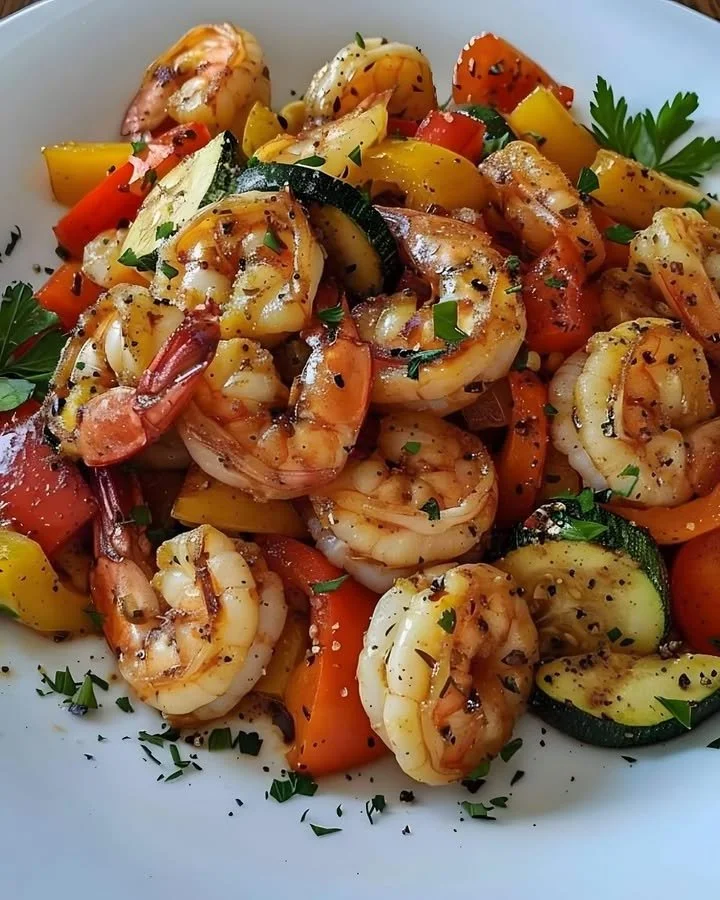
The Lemon Herb Shrimp and Veggie Skillet is not just a meal; it’s an experience that encapsulates the beauty of simplicity in cooking. Every element of this dish plays a crucial role, creating a delightful symphony of flavors and textures that celebrates freshness.
As you enjoy this colorful dish, take a moment to appreciate how something so straightforward can transport you to warmer days and happy memories. What personal touches would you add to this recipe to make it your own?