Pro Tips for Success
For Perfect Frying
- Temperature Matters: Ensure your oil is at 375°F (190°C) before frying. If the temperature is too low, the ice cream will melt too quickly; too high, and the coating may burn before cooking through.
For Texture
- Double Coating: For an extra crunchy texture, consider double-coating the ice cream balls. Freeze them again after the initial coating, then dip them in egg and roll in the cornflakes once more before frying.
For Serving
- Serve Immediately: Fried ice cream is best enjoyed fresh and hot. If you have any leftover, consume them right away, as they lose their structure and texture if left to sit for too long.
Storage and Freshness
For Storing Uncooked
- Freeze the Balls: If you want to make this in advance, freeze the coated ice cream balls for up to a week before frying. This allows for quick and easy preparation later.
For Storing Cooked
- Limited Storage: Cooked fried ice cream is best eaten right after frying. If you must store it, keep it in the freezer in an airtight container, but be aware that it may lose its crispy texture when reheated.
For Freshness
- Avoiding Melting: Always fry in small batches. Frying too many at once can lower the oil temperature, causing the ice cream to melt before the coating becomes crispy.
Final Thoughts
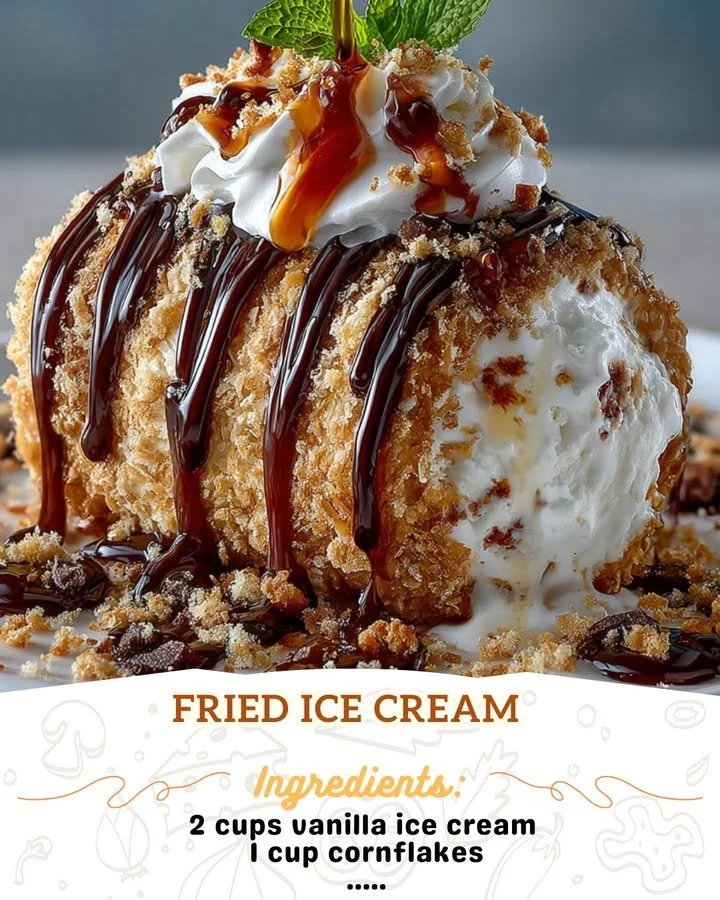
Fried ice cream is a tremendous treat that beautifully showcases the joy of cooking and sharing memorabilia from the past. The delightful contrast between the warm, crispy exterior and the cold, creamy interior creates an unforgettable experience. Whether you’re serving it at a party or enjoying a quiet night at home, this dessert is sure to bring joy and laughter.
Have you ever tried making fried ice cream at home? What other desserts do you love that provide a unique twist of texture and flavor?