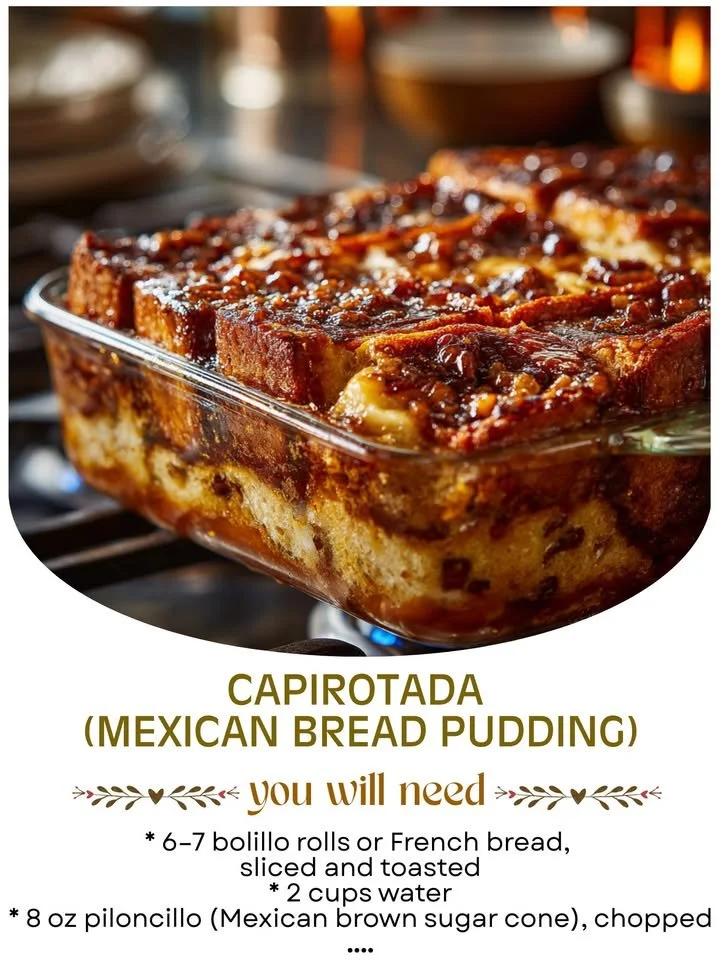
Ingredients
The Base
- 6–7 bolillo rolls or French bread, sliced and toasted
- Cooking spray or butter for greasing dish
The Filling
- 2 cups water
- 8 oz piloncillo (Mexican brown sugar cone), chopped (or 1 cup dark brown sugar)
- 1 cinnamon stick
- 2 whole cloves (optional)
- 1/4 cup butter, melted
- 1/2 cup raisins
- 1/2 cup chopped pecans or walnuts
- 1 cup shredded Mexican cheese (queso fresco, queso añejo, or Monterey Jack)
Instructions on the next page 👇👇
Directions
-
Preheat the oven to 350°F (175°C). Lightly grease a baking dish to prevent sticking.
-
In a saucepan, combine the water, piloncillo, cinnamon stick, and optional cloves. Simmer gently over medium heat until the sugar is fully dissolved, allowing the syrup to thicken slightly. Do not forget to remove the spices once the syrup is prepared.
-
Arrange a layer of your toasted bread slices at the bottom of the prepared baking dish. This foundation is crucial for the overall texture of your capirotada.
-
Drizzle some of the piloncillo syrup and melted butter over this layer of bread. Make sure to pour evenly and generously, as this adds remarkable moisture.
-
Sprinkle a mixture of raisins, chopped nuts, and cheese over the bread. These ingredients not only enhance flavor but also create a tremendous medley of textures.
-
Repeat the layering process. Continue this until you’ve used up all your ingredients, making sure to finish with a final layer of syrup, nuts, and cheese on top to create a beautiful presentation.
-
Bake uncovered for 30–35 minutes, or until the surface is bubbly and golden brown. The aroma wafting through your kitchen will only add to the anticipation.
-
Allow the dish to rest for about 10 minutes before serving. This resting period will help the flavors meld beautifully and make serving easier.
Continue reading on the next page 👇👇
Pro Tips for Success
Layering Best Practices
- Create Balanced Layers: Aim for equal distribution of your ingredients in each layer. This ensures every portion of the capirotada delivers the same tremendous taste experience.
- Use Stale Bread: If possible, use slightly stale bread. This type of bread absorbs the syrup perfectly without becoming too soggy, providing a better texture in your final dish.
- Experiment with Flavors: Feel free to include other dried fruits or nuts—aspects of personal preference can make this dish even more special.
Baking Tips
- Oven Temperature Check: Make sure to verify your oven’s accuracy. Every oven is different, and maintaining the correct temperature is key for achieving that desired golden crispness.
- Use a Clear Baking Dish: For those curious about the cooking process, a clear glass baking dish allows you to see the layers and monitor the browning, ensuring a perfect bake.
- Cover with Foil If Needed: If the top browns too quickly, cover it with aluminum foil midway through baking to allow the inside to cook without burning the top.
Storage and Freshness
- Cool Completely Before Storing: Allow the capirotada to cool completely at room temperature before refrigerating. This helps firm up the pudding for better slicing.
- Storing in Air-tight Containers: Use an air-tight container to keep flavors intact for up to 4–5 days in the fridge. It stays delicious and can be reheated perfectly.
- Freezing Options: If desired, capirotada can be frozen for up to three months. Make sure to wrap it tightly. Thaw it overnight in the refrigerator before reheating.
Final Thoughts
Capirotada is not just a dessert but a heartfelt representation of culture and family. Each layer tells a story of tradition, bringing friends and family together at the table. Sharing this dish during special occasions or even a simple weeknight dinner will undoubtedly evoke cherished memories.
What is your favorite twist on this classic recipe, or which ingredient brings back your most tremendous memories of family gatherings?